

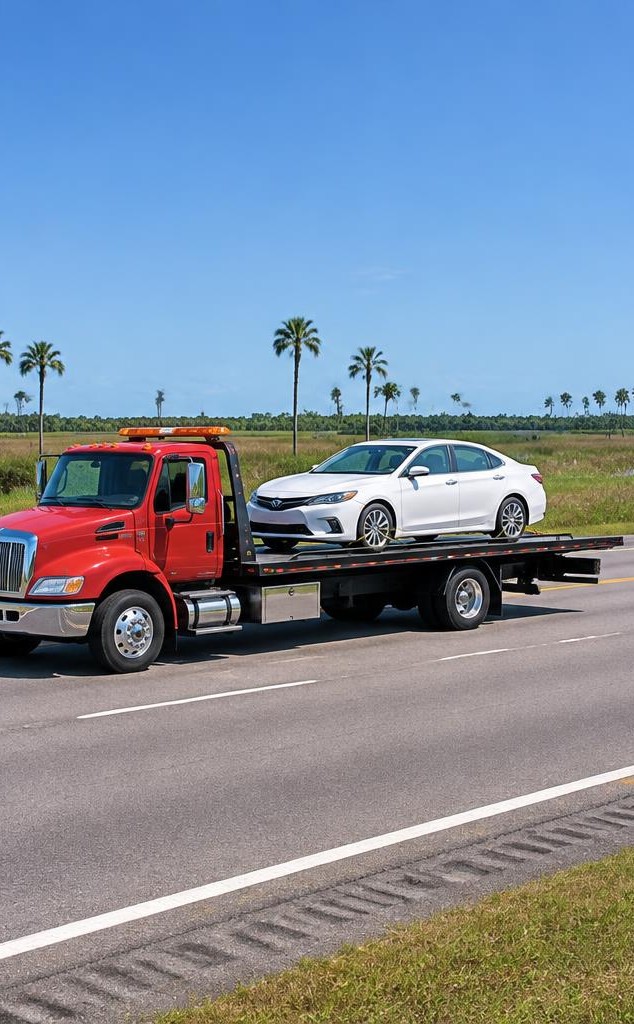
A longer tow is easier to discuss when both ends of the trip are clear. The vehicle may be in Orlando, the repair shop may be near Tampa, or the move may connect a home with a destination in Daytona Beach, Ocala, Melbourne or The Villages. The city names alone do not define the job. Actual pickup, actual drop-off, vehicle condition and access determine what needs to be planned before the wheels move.
Separate the service reach from a confirmed trip
Central FL Auto Towing & Recovery is based in Apopka and serves Central Florida up to 100 miles from Apopka. A longer trip across Florida is something to call and discuss, not a promise that every destination can be accepted. Share both locations and the requested timing. Equipment suitability, access, distance and availability need confirmation. A submitted form begins the request but is not a booking.
Do not make the rest of your moving plan depend on transport that has not been confirmed. If a seller is waiting, a shop has an appointment or a property gate closes at a certain time, include that information from the beginning. A destination can be possible in principle while still needing a different receiving window or access arrangement.
Describe why the car is being transported
There is a difference between moving a running car rather than driving it and transporting a car that cannot safely move itself. Tell the crew whether it starts, rolls and steers, whether the brakes appear usable and whether keys are available. If the vehicle has been sitting, mention old tires or possible seized wheels. A long journey does not remove loading problems; it makes clear preparation at the pickup more important.
An AWD vehicle, lowered car or car with wheel damage also needs its condition described. Do not assume a familiar vehicle label explains modifications or the present state of the car. Flatbed towing carries the vehicle with its wheels off the road, but the loading plan still needs clearance and rolling information. A repair diagnosis is separate from transport planning.
Confirm who can release the vehicle
At pickup, someone must have permission to release the car. A private seller, homeowner, shop or yard may each have different access rules. Agree who will meet the truck or provide entry and keys. If you are not attending, discuss an authorized person with the crew before booking. Do not rely on a note left on a windshield as the whole release arrangement.
A car in a managed lot may need additional permission from the operator. An auction or repair yard may have collection hours and paperwork requirements. Contact that business directly and have its instructions ready. The truck arriving does not automatically solve a missing authorization, closed gate or incomplete release. Resolve those practical issues before confirming a trip that crosses communities or counties.
Prepare the receiving end with the same care
Call the destination and confirm it can accept the car in its condition. A non-running vehicle may need a particular unloading area, while a damaged vehicle may require a repair business with appropriate receiving space. Ask for a contact person and instructions about keys. If the car is being delivered to a home, make sure there is permission to park and enough access to unload without depending on the engine starting.
A receiving window matters on a longer trip. Share it as a constraint for discussion, not as a guaranteed arrival time. If the recipient cannot be present, confirm an alternative plan before pickup. A tow should not end with a car left at an unapproved location because everyone assumed someone else would be there.
Understand what goes into the quote
Ask for a quote using the actual details. Distance, vehicle type, condition and the situation affect it. Loading access, a truck’s size or a car’s rolling condition can change the planning conversation. Do not estimate the entire cost by multiplying a map distance by an assumed rate. This website does not publish prices, and no generic online calculator can substitute for the specific request.
If a destination changes after the plan is discussed, tell the crew before the vehicle moves. A change may affect distance, receiving hours and availability. Likewise, if the car’s condition changes, share that information. Clear updates are more useful than arriving at pickup with a different vehicle state than the crew was told to expect.
Treat personal belongings as a separate decision
A transported vehicle should not be assumed to be a moving container. Discuss anything left onboard and remove essential valuables or documents when it is safe to do so. Secure loose items that could move inside the car. If access to the vehicle is unsafe or restricted, explain that rather than taking risks to retrieve belongings. Keep the keys and any required release paperwork organized for the handoff.
Do not place extra equipment or household cargo in a vehicle without discussing it. The vehicle’s total condition and load matter to the transport plan. This is especially important for pickups and work vehicles, where tools or materials may not be obvious from an exterior description. The fact that the vehicle is going to a home does not change those considerations.
Put the trip details in one place
Write down pickup, destination, both contact people, access instructions and the vehicle description. Keep the current version available so different people do not pass along conflicting addresses. If a shop provides specific receiving notes, include them. Keep private gate codes in direct communication rather than posting them publicly. A well-organized request makes it easier to confirm the actual job.
Our long-distance towing page is a starting point for that conversation. Call (888) 563-1435 with your vehicle, locations and restrictions. We will discuss whether the requested trip can be arranged. Planning does not mean making unsupported promises about timing; it means agreeing on the details before collection begins.
A local crew. One call.
Tell us about the vehicle and your destination.
(888) 563-1435Open 24 hours, 7 days
REQUEST A TOW