

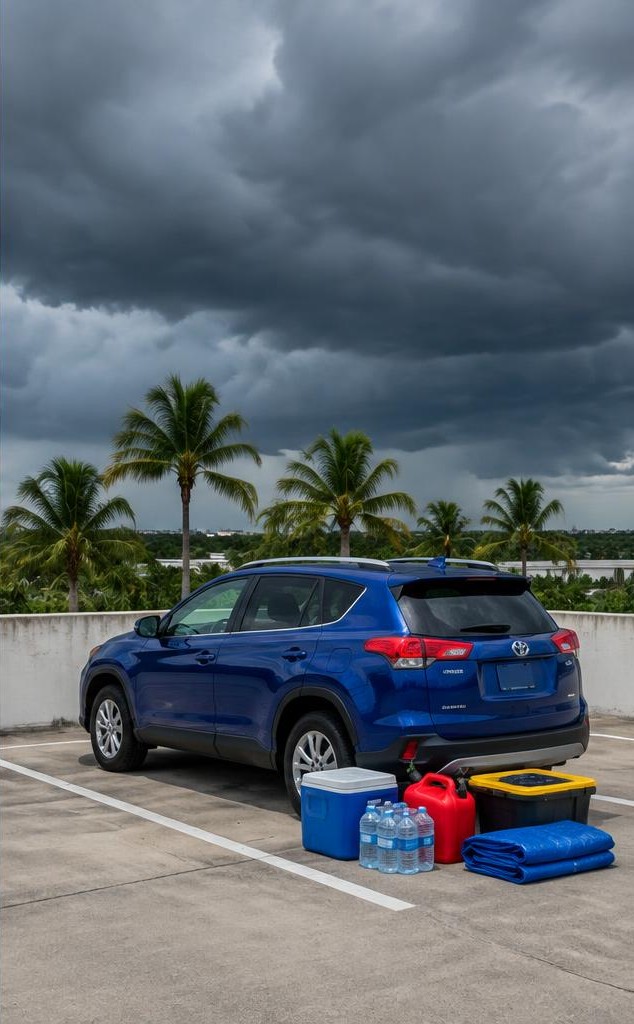
Preparing vehicles before a storm is easier when you make decisions before the weather becomes dangerous. A daily driver, work truck and non-running project car all need a permitted place to sit, but they may not have the same way to get there. Start with official local weather and emergency guidance. A towing request should support a safe preparation plan, not encourage anyone to travel through flooding or hazardous conditions.
Choose a destination before you choose a moving time
If a vehicle needs to leave a flood-prone or otherwise unsuitable parking space, identify a receiving location first. Get permission from the property owner and confirm it has access for unloading. A friend’s driveway may be available for a running car but not suitable for positioning equipment. The destination should be agreed with the person receiving the vehicle, including where it will sit and whether it needs to be moved again later.
Avoid choosing a public lot or another property merely because it appears empty. Parking rules and access controls still apply during storm preparation. If you are moving a work vehicle, consider its height, weight and any cargo. A box or dump truck needs its transport suitability confirmed directly. Do not assume that the place used for a passenger car can accept a larger vehicle or the equipment delivering it.
Non-running vehicles need extra preparation
A project car that has not started in months may still need to roll for loading. Check what you already know about keys, brakes, tires and wheel condition, and explain it when you call. Do not make risky repairs simply to meet a moving deadline. A vehicle on soft ground or blocked behind other equipment can need a different plan from a car sitting on a paved driveway with open access.
Our non-running vehicle hauling page explains the information worth having ready. Tell the crew whether the vehicle has been moved recently and whether the destination can receive it without starting the engine. If you do not know whether a wheel is seized, say so. Uncertainty is useful information when it prevents an assumption about loading.
Arrange access while people are still available
A gate code is not the whole access plan. Someone must have permission to release the vehicle, and the crew needs enough space to approach it. A stored car may be behind a trailer, another vehicle or a locked entrance. Resolve those issues early rather than expecting the pickup to solve them. Keep keys available and identify a reachable person who can confirm the arrangements if you need to leave the property.
Weather preparation may involve several households or businesses moving at once. Discuss your request early, but do not interpret a submitted form as a booking. Equipment, access and conditions need confirmation. If the weather deteriorates, follow official instructions and speak with the crew about what can safely proceed. No tow arrangement should be treated as a guarantee that work will continue during hazardous weather.
Do not drive through water to save a vehicle
Standing water can hide depth, pavement damage and other hazards. The fact that another vehicle crossed does not establish a safe route for yours. Turn away from flooded roads and follow official closures and directions. If the car is already stranded, put people’s safety first and contact emergency services when there is immediate danger. Do not enter floodwater to reach a vehicle or gather possessions.
A vehicle on the far side of a flooded road is not an ordinary accessible pickup. Tell the crew what separates the vehicle from the roadway and whether emergency personnel have restricted the area. Do not attempt to guide a truck through water yourself. The tow request can be discussed once safe access is established; clearing dangerous conditions belongs to the relevant authorities.
After water exposure, do not test the engine
A car that sat in floodwater may have water in places you cannot see. Starting it can make an already serious problem worse. Do not start the engine until a qualified professional has assessed potential water intrusion. That applies even if the cabin appears dry or the water has receded. Electrical systems and other components can be affected without obvious signs visible from the driver’s seat.
Record what you can safely observe for the repair business: the approximate exposure, how high water reached and whether the car was running. Do not attempt to confirm the damage by repeatedly turning the key. For transport, explain that the vehicle has been exposed to water and tell the crew about its rolling condition. Your mechanic or insurer may provide destination instructions; confirm those before the vehicle is collected.
Plan the transport as a separate task from the repair
The towing crew needs pickup, destination, keys, access and vehicle condition. The repair business needs the history of water exposure and a chance to inspect the car. Do not combine those into a promise that the vehicle can be fixed or driven after delivery. Flatbed towing can be discussed when the car needs transport without being driven, but the loading plan still depends on its condition.
If an insurer is involved, speak with it directly about requirements. Do not assume a tow request establishes coverage. Ask the receiving shop if it can accept a water-exposed vehicle and where it should be placed. If you must wait for assessment, confirm a permitted storage location rather than choosing one after pickup begins.
Keep personal and access information private
Remove essential belongings only when it is safe. Keep documents, keys and access arrangements organized, but avoid posting gate codes or private details publicly. Share them directly when necessary for the job. Take photos only from a safe position; no image is worth entering unstable ground, floodwater or a restricted area. A clear description can begin the conversation even when photographs are not possible.
Central FL Auto Towing & Recovery is based in Apopka, with service reach up to 100 miles across Central Florida. Call to discuss a vehicle move before or after a storm and confirm what can be safely arranged. Preparation helps, but official emergency guidance and safe access remain the priorities. When a form cannot send, call rather than assuming the request reached the crew.
A local crew. One call.
Tell us about the vehicle and your destination.
(888) 563-1435Open 24 hours, 7 days
REQUEST A TOW