

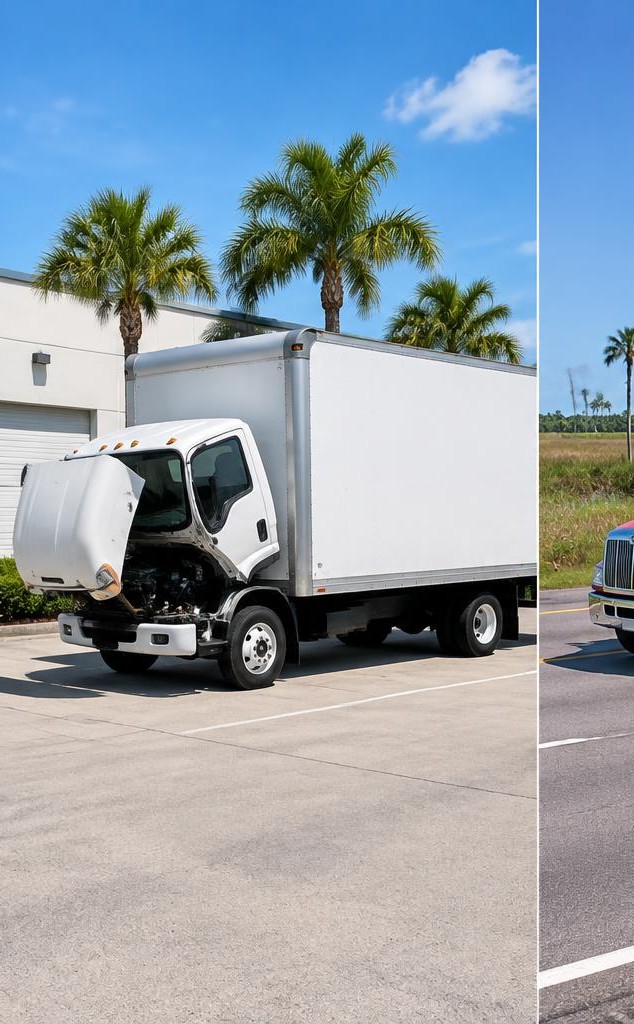
A box truck that will not start can interrupt deliveries. A stalled dump truck can leave a jobsite with one less vehicle and a complicated pickup. The first useful step is not to guess which part failed. It is to collect the details that determine whether and how the vehicle can be transported. Size, weight, cargo and access matter together. A description that works for a passenger car is not enough for a commercial truck.
Start with the truck’s identity
Have the make, model and body type ready. Say whether you are describing a box truck, dump truck, step van or work pickup. If you know the vehicle specifications, keep them available for the conversation. Do not assume two trucks with similar-looking cabs weigh the same. Bodywork, equipment and a load can change the job. Tell the crew about modifications and anything that extends the height or length.
Central FL Auto Towing & Recovery’s real truck photos show transport involving box and dump trucks. Those photographs are not a published weight limit or permission to assume any commercial vehicle can be accepted. Suitability must be confirmed directly. If a specification is unknown, explain that instead of substituting a guess that could lead to an unsuitable equipment plan.
Be clear about loaded or empty
Cargo is part of the transport discussion. A truck’s empty weight is not the same as its current weight when carrying materials, tools or deliveries. Say what is aboard and provide an approximate total weight when you can. If a dump body contains material, tell the crew before booking. Do not wait for the truck to arrive to mention a load because the body looks closed or because the cargo will not be touched.
The decision about whether a load must be removed should be made with the relevant people and the towing crew. Do not unload beside moving traffic or on unstable ground just to prepare for collection. If a business or site manager controls the load, include that person in the plan. The transport arrangement must account for both the vehicle and what it carries.
Explain what happens when you try to move it
A truck that will not start may still roll. Another may have a wheel, brake or drivetrain issue that prevents movement. Describe those separately. Tell the crew whether keys are available, whether steering can be controlled and whether any wheel is visibly damaged. Avoid repeated starting attempts when a serious problem is suspected. Mechanical diagnosis belongs to the repair professional, while loading planning uses the condition you can safely describe.
If the truck has leaked fluid, lost power or been involved in an incident, mention that. Do not inspect beneath a vehicle without appropriate professional support. A safe description may include uncertainty. Saying that you do not know whether the rear wheels turn is better than assuming they do because the truck drove into the space earlier.
Look at the access, not just the address
A commercial property can have several gates and loading areas. Give the exact entrance that reaches the truck and say whether the space is paved, gravel or soft ground. A rollback needs room to position; a site that admits a small delivery vehicle may not automatically allow the collection equipment to reach the truck. Height restrictions, gate width, turning room and overhead obstacles belong in the conversation.
For a jobsite, identify who can approve collection and who can open the entrance. If workers or other equipment share the space, coordinate a permitted waiting and loading area with the site manager. Do not ask a driver to navigate around active machinery without an agreed access plan. Weather can change a ground surface, so describe the current conditions rather than the conditions on the day the truck arrived.
Make the destination ready for a commercial vehicle
The repair business needs to know what is coming. Confirm it can receive the truck’s size and condition and ask where it should be delivered. A passenger-car receiving lane may not suit a box or dump truck. Share the contact person, opening window and any instructions about keys or cargo. If the shop expects an empty truck, resolve that before collection instead of discovering the disagreement at delivery.
If the vehicle is going to a yard rather than a repair business, confirm permission and access there too. A destination that accepts the truck on paper still needs physical space for unloading. Discuss a plan for a vehicle that cannot start after it arrives. Do not depend on driving it away from the deck if its mechanical condition is the reason for the tow.
Keep the request organized
A short checklist can prevent important details from getting lost:
- Identify the truck and its approximate dimensions.
- Give the current weight information and loaded or empty status.
- Describe keys, wheels, brakes and any known damage.
- Provide the precise pickup entrance and surface.
- Confirm collection permission and a receiving destination.
That list is a starting point, not a substitute for discussing the job. The crew may need additional information based on the vehicle. Keep a phone reachable and avoid passing incomplete instructions through several people when one site contact can confirm access.
Choose the relevant transport conversation
For the larger vehicle, start with our box and dump truck towing guidance. If you are dealing with a work pickup, describe its rack, topper, modifications and tools when reviewing pickup and work truck towing. The right service is determined by the actual vehicle and situation, not the urgency of the work it was meant to perform.
Our company is based in Apopka and serves Central Florida up to 100 miles from Apopka. Call with the details above to discuss equipment, access and availability. An online request does not establish a weight limit, price or confirmed pickup. If the vehicle is creating immediate danger, contact the appropriate emergency or site authorities first and follow their instructions.
A local crew. One call.
Tell us about the vehicle and your destination.
(888) 563-1435Open 24 hours, 7 days
REQUEST A TOW